

Working remotely in Portugal can be a great option for people who want more flexibility while continuing to build a professional career. Remote and hybrid opportunities are available in fields such as technology, customer service, marketing, administration, sales, design, and other digital professions.
However, finding a genuine remote job takes more than searching Google for “work from home Portugal.” You need to understand what the employer actually means by “remote,” check where you are allowed to work from, and make sure the vacancy is legitimate before sending personal information.
This guide explains where to look for remote jobs in Portugal, which types of roles are commonly available, what employers may expect, and how to spot potential job scams.
What Are Remote Jobs in Portugal?
A remote job allows an employee to complete some or all of their work away from the company’s physical office. Most remote positions rely on a computer, internet connection, email, messaging platforms, and other online tools.
The word “remote” can mean different things depending on the employer. A vacancy may be described as:
- Fully remote – You normally work away from the company’s office.
- Hybrid – You split your time between working remotely and working from an office.
- Remote within Portugal – You can work from home, but you must be physically located in Portugal.
- Remote within a specific region – The employer limits the role to a particular country, city, region, or time zone.
- Remote-first – Remote work is the company’s normal way of operating, although occasional office meetings may still be required.
Always read the complete job description. A position labelled “remote” does not necessarily mean you can work from anywhere in the world.
Who Can Find Remote Jobs in Portugal?
Remote work is particularly common in jobs where most responsibilities can be handled online.
Depending on your experience and the employer, you may find opportunities in several areas.
Technology and IT
Technology is one of the fields where remote work is particularly common. Examples include:
- Software developer
- Web developer
- IT support specialist
- Data analyst
- Cybersecurity professional
- QA tester
- Cloud or systems specialist
Technical roles often require specific skills, previous experience, professional certifications, or a portfolio that demonstrates what you can do.
Marketing and Digital Media
Marketing and creative professionals may also find remote opportunities in areas such as:
- Digital marketing
- SEO
- Content writing
- Social media management
- Email marketing
- Graphic design
- Video editing
For creative or content-related positions, employers may ask to see examples of previous work. Having a portfolio can therefore be useful when applying.
Customer Support
Some companies employ customer-service staff who work remotely and communicate with customers through:
- Live chat
- Telephone
- Video calls
- Customer-support platforms
Language skills can be particularly valuable in customer-support roles, especially when the company serves customers in several countries.
Sales and Business Development
Remote sales jobs can include positions such as:
- Sales representative
- Business development representative
- Account executive
- Customer success specialist
- Inside sales roles
These jobs may involve regular phone calls, video meetings, email communication, and customer relationship management software.
Administration
Some administrative responsibilities can also be handled remotely. Examples include:
- Virtual assistant
- Administrative assistant
- Data-related office work
- Scheduling
- Online research
- Operations support
The exact duties and level of experience required can vary significantly from one employer to another.
Where to Search for Remote Jobs in Portugal
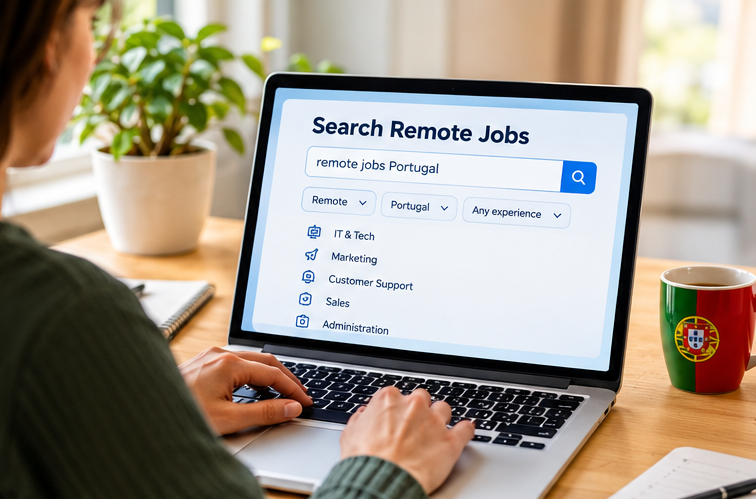
It is usually better to search across several sources rather than depend on a single job website.
1. IEFP
Portugal’s public employment service provides the iefponline platform, where job seekers can search for employment opportunities and review information such as the occupation, location, and required qualifications.
When you find a vacancy, read the details carefully to determine whether the position is genuinely remote, hybrid, or office-based.
2. EURES
EURES is the European employment network and provides job-search services across participating European countries.
Its Portugal guidance points job seekers toward online job portals and professional networks such as LinkedIn. EURES also provides information about living and working conditions and resources for people looking for employment in Europe.
3. LinkedIn
LinkedIn is commonly used by employers and recruiters to advertise professional positions.
When searching, useful filters include:
- Location: Portugal
- Workplace type: Remote
- Date posted
- Experience level
- Employment type
Before applying, look at the company profile and recruiter information where available. This can help you determine whether the vacancy is connected to a real organisation.
4. Company Career Pages
An employer’s official careers page is another useful place to look for vacancies.
If you discover a remote position on another job board, search for the company’s official website and check whether the same job is listed there. Comparing the two listings can also help you spot inconsistencies.
5. Specialist Job Websites
Depending on your profession, specialist job platforms may have remote positions that do not appear on general employment websites.
Try different search phrases, including:
- Remote jobs Portugal
- Remote jobs Lisbon
- Work from home Portugal
- Remote customer service Portugal
- Remote software developer Portugal
- English-speaking remote jobs Portugal
- Remote marketing jobs Portugal
Using several search terms is worthwhile because employers do not always describe similar jobs in the same way.
How to Check Whether a Remote Job Is Legitimate
Online recruitment can sometimes make it easier for scammers to approach job seekers. You may never meet the person advertising the job in person, so it is important to carry out your own checks.
Before applying or sending sensitive information, take some time to investigate the employer and the vacancy.
Check the Employer
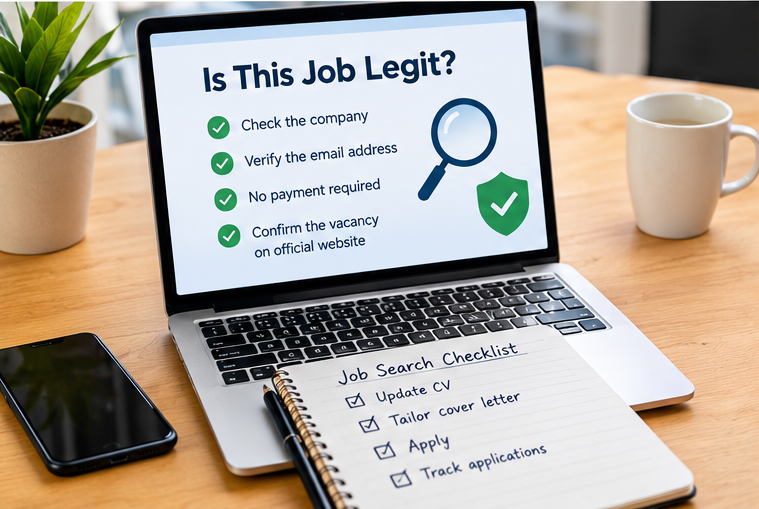
Look for information such as:
- An official company website
- A genuine company careers page
- A professional company profile
- A verifiable business address where appropriate
- Consistent information across different sources
- A professional recruitment contact
Be careful if an employer has almost no online presence or if the information in the job advertisement does not match the information published by the company itself.
Check the Email Address
Pay attention to the email address used by the recruiter.
An email using the company’s official domain can be useful evidence that the contact is connected to the organisation. However, an email address by itself does not prove that a job is genuine.
Take extra care if someone claiming to represent a company uses a personal email account and then asks you for money, banking information, or sensitive documents.
Never Pay to Get a Job
You should be cautious whenever someone asks you to pay money simply to receive or secure a job.
Warning signs can include requests for:
- Recruitment fees
- Training payments before employment
- Equipment deposits
- Cryptocurrency payments
- Gift cards
- “Registration” fees
- Money transfers to secure a position
If a recruiter asks for payment, stop and verify the opportunity independently before continuing.
Verify the Vacancy Independently
If you find a job through social media or an unfamiliar website, do not rely solely on the contact details provided in the advertisement.
Instead:
- Find the company’s official website yourself.
- Look for its careers or recruitment section.
- Search for the advertised job title.
- Compare the official listing with the advertisement you found.
- Contact the company through an official channel if anything seems inconsistent.
Taking a few extra minutes to verify the job can help you avoid unnecessary risks.
What Employers May Look for in Remote Workers

Remote employees often need to manage their responsibilities without constant face-to-face supervision.
The exact requirements depend on the position, but employers may look for skills such as communication, digital confidence, time management, and the ability to work independently.
Communication
Remote workers commonly communicate through email, messaging platforms, telephone calls, and video meetings.
Being able to explain ideas clearly and respond professionally is therefore important in many remote roles.
Digital Skills
Many remote positions require familiarity with tools such as:
- Microsoft Office or Google Workspace
- Video-conferencing software
- Team communication platforms
- Project-management systems
- Industry-specific software
The tools you need will depend on the employer and the type of work.
Time Management
Remote employees may have more control over their daily routine, but they still need to meet deadlines and manage their workload effectively.
Employers may expect you to organise tasks, prioritise work, and communicate when something is delayed.
Self-Discipline
Working from home can be very different from working in a traditional office. Without colleagues physically nearby, employees often need to stay focused and manage their own working routine.
Language Skills
Language requirements depend on the employer, role, and customer base.
Portuguese can be important for some jobs, while international companies may advertise positions that primarily require English or another language.
EURES notes that Portuguese language skills can be important when looking for work in Portugal, although opportunities also exist in some sectors for people who do not speak Portuguese.
How to Prepare Your CV for a Remote Job
Your CV should quickly show an employer why you are suitable for the position and how your experience can translate to a remote working environment.
Consider highlighting:
- Relevant professional experience
- Digital skills
- Communication skills
- Languages
- Software and tools you use
- Measurable achievements
- Previous remote or hybrid experience
- Relevant certifications
- Portfolio links where appropriate
If you have worked remotely before, explain what you actually did rather than simply stating “worked remotely.”
For example, you could mention that you coordinated projects online, supported customers through digital channels, managed deadlines independently, or collaborated with colleagues in different countries.
Specific examples give employers a clearer picture of your experience.
Write a Targeted Cover Letter
A short, personalised cover letter can help explain why your background matches the position.
Focus on:
- The specific job you are applying for
- Your relevant experience
- The skills mentioned in the vacancy
- Your ability to work independently
- Your communication and collaboration experience
Try not to send exactly the same generic cover letter to every employer. Adjusting it to the position can make your application more relevant.
Remote Jobs for International Applicants
If you are applying from outside Portugal, pay close attention to the employer’s location and work-authorisation requirements.
A job described as “remote” does not automatically mean that the company can employ someone who lives in another country.
The employer may limit the position to:
- Portugal
- The European Union
- The European Economic Area
- A particular country
- A particular time zone
- Specific approved hiring locations
Always check these restrictions before applying.
If you already have the legal right to work in Portugal, check whether the employer accepts employees based in Portugal. If you are currently outside Portugal, do not assume that a remote position automatically includes a visa, residence permit, or work authorisation.
Immigration and employment requirements can change. International applicants should therefore check current requirements with the appropriate Portuguese authorities before making decisions based on a job offer.
Remote Work and Portuguese Employment Rules
Portugal has a legal framework covering telework.
Official Portuguese public-administration guidance explains that the Labour Code’s telework regime covers work carried out remotely using information and communication technologies. In the general framework, telework agreements are also subject to specific requirements.
The rights and responsibilities involved can depend on the employment arrangement, the nature of the work, and the individual circumstances of the employee.
For that reason, do not assume that every remote position has the same conditions. Read your employment contract or telework agreement carefully before accepting an offer.
Questions to Ask Before Accepting a Remote Job
Before signing a contract, make sure you understand how the position will actually work.
Useful questions include:
- Is the position fully remote or hybrid?
- Does the employee have to live in Portugal?
- Is there a required city or region?
- How often are employees expected to visit an office?
- What are the normal working hours?
- Which time zone does the team work in?
- What equipment does the company provide?
- Who pays for work-related expenses?
- What type of employment contract is offered?
- What is the salary and payment schedule?
- What are the probationary arrangements?
- How is performance measured?
- Who will be your direct manager?
Getting important details in writing can help prevent misunderstandings after you start the job.
Common Mistakes When Searching for Remote Jobs
Searching Only for “Work From Home”
Not every employer uses the phrase “work from home.” Try terms such as “remote,” “telework,” “teleworking,” and “hybrid,” along with the name of your profession.
Applying Without Checking Location Restrictions
A remote job may still be available only to people living in a particular country or region.
Always check the location requirements before spending time on an application.
Ignoring Language Requirements
Read the job description carefully to see which languages are required. Do not assume that every international or remote position is English-speaking.
Sending the Same CV Everywhere
A CV that is tailored to the vacancy can make your most relevant experience and skills easier for recruiters to find.
Trusting Social Media Job Posts Without Verification
Social media can be useful for discovering job opportunities, but you should independently verify the employer and vacancy before providing sensitive information.
Paying for a Job
Never assume that a payment request is legitimate simply because the recruiter uses a company logo, official-looking documents, or professional language.
A Simple Remote Job Search Routine
A consistent routine can make your job search easier to organise.
Step 1: Choose Your Target Roles
Choose two or three job categories that match your experience and skills.
Step 2: Prepare Your CV
Update your experience, skills, languages, certifications, and relevant achievements.
Step 3: Search Multiple Sources
Check official company career pages, IEFP, EURES, LinkedIn, and relevant specialist employment platforms.
Step 4: Save Suitable Vacancies
Keep a simple record of the company, job title, application date, and current application status.
Step 5: Verify the Employer
Visit the company’s official website and compare the vacancy details with the job advertisement you found.
Step 6: Apply Carefully
Use the employer’s official application process whenever possible. Only provide information that is reasonably required at that stage of recruitment.
Step 7: Track Your Applications
Keep track of interviews, follow-ups, deadlines, and responses so that applications do not get lost.
Remote Job Scam Warning Signs
Take extra care when a job advertisement:
- Promises unusually high earnings for very little work
- Offers a position without a meaningful interview or assessment
- Requires payment before employment
- Requests cryptocurrency or gift-card payments
- Asks you to transfer money through your personal bank account
- Uses a suspicious email address
- Contains inconsistent company information
- Pressures you to make an immediate decision
- Requests sensitive personal information without a clear reason
- Sends an unexpected cheque or payment and asks you to return part of the money
One warning sign does not automatically prove that a job is fraudulent. However, several inconsistencies should be a reason to stop and investigate the opportunity more carefully.
Frequently Asked Questions
Are there remote jobs in Portugal?
Yes. Remote and hybrid opportunities can be found in areas such as technology, customer support, marketing, sales, administration, and other digitally based professions. The number of available positions varies depending on the employer and occupation.
Can foreigners apply for remote jobs in Portugal?
International applicants can apply for suitable positions, but eligibility depends on the employer’s hiring location, the requirements of the job, and the applicant’s legal right to work in the relevant location.
Do remote jobs in Portugal require Portuguese?
Not always. Language requirements depend on the company and position. Some jobs may operate mainly in English or another language, while others require Portuguese.
Can I work remotely for a Portuguese company from another country?
It depends on the employer and the legal and contractual arrangements involved. A job being labelled “remote” does not automatically mean that you can work from any country.
Where can I find legitimate remote jobs in Portugal?
Start with sources such as IEFP, EURES, official company career pages, LinkedIn, and established professional recruitment platforms. Always verify the employer and vacancy before applying.
How can I tell if a remote job is a scam?
Research the employer independently and, where possible, verify the vacancy through the company’s official website. Be cautious about recruitment fees, requests for money, unexpected payments, and unnecessary requests for sensitive information.
Do remote jobs provide visa sponsorship?
You should not assume that a remote vacancy includes visa sponsorship. Check the employer’s specific requirements and verify current immigration rules with the appropriate official authority.
Conclusion
Remote jobs in Portugal can provide greater flexibility, but finding the right opportunity requires some research.
Start with reputable employment sources, check official company career pages, tailor your CV to each relevant position, and verify employers before sharing sensitive information.
If you are applying from outside Portugal, pay particular attention to where the employer allows remote employees to live and whether you have the required right to work.
The basic rule is straightforward: verify the employer, understand the working arrangement, read the contract carefully, and never pay money simply to obtain a job.