

A Basic Portuguese Guide for the Workplace
Portugal has become a genuinely appealing place to build a career, but landing a job here isn’t as simple as firing off a few applications and waiting for replies. Before you start, it helps to understand the local job market, what employers expect, how much Portuguese you’ll actually need, the usual application process, and — if you’re coming from outside the EU — what work authorization you’ll need to sort out first.
This guide walks through the basics: how job hunting works in Portugal, what documents you’ll likely need, how employment contracts are typically structured, and what to check before you say yes to an offer. If you’re just getting started, we’ve also put together a step-by-step guide to applying for jobs in Portugal.
What’s it actually like to work in Portugal?
Portugal’s labor market is a lot more varied than people expect — different industries, different types of roles, different kinds of contracts. You’ll find opportunities in tourism and hospitality, tech, healthcare, construction, logistics, retail, professional services, and more.
Finding the right opportunity usually comes down to matching it against your qualifications, your legal right to work, your language skills, and where you actually want to live. According to Portugal’s official government guidance, foreign workers in Portugal have the same rights and duties as Portuguese citizens.
If you’re just starting out, it helps to answer three questions early:
- Which career would I actually be good at?
- Where are the best opportunities located?
- Am I legally allowed to work in Portugal?
These questions matter even more if you’re a foreigner — our guide to finding a job in Portugal goes into more detail.
Who can work in Portugal?
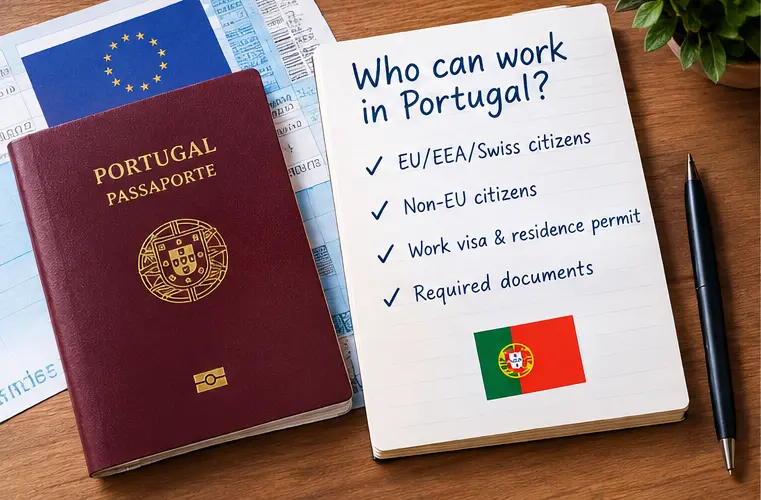
What you’ll need to sort out largely depends on your nationality.
EU, EEA, and Swiss citizens
Citizens of EU member states, the EEA, and Switzerland generally move and work more freely under the relevant European framework, though registration or administrative steps can still apply depending on your situation.
Non-EU citizens
If you’re coming from outside the EU/EEA/Switzerland, immigration and visa requirements deserve your full attention. Per the Portuguese Government, non-EEA nationals who want to live and work in Portugal need the appropriate right to work. There are several visa categories depending on the type and length of the work you’ll be doing — our visa guide category breaks these down.
Keep in mind that having a job offer in hand doesn’t automatically mean you’re cleared to work in Portugal. It’s worth confirming your immigration and employment status directly with Portuguese authorities before making any big moves.
How to find jobs in Portugal

There’s no single “right” way to search — most people end up using a mix of these:
1. Government employment services
IEFP is Portugal’s public employment service, offering job listings and career resources. Portugal’s official government guidance points job seekers directly to IEFP’s employment portal as a starting point.
2. EURES
EURES provides information on the job market and living/working conditions for people relocating within Europe. It’s also recommended by Portuguese official guidance for anyone exploring employment across Europe.
3. Company career pages
Larger employers often post directly to their own sites, alongside specialized job boards. If you’re applying directly, check for:
- The employer’s official website
- Verifiable company details and contact info
- The specific work location
- Contract type and working hours
- Salary or compensation details
- Application requirements
4. Professional networking
Networking platforms matter a lot for skilled and professional roles. Keep your profile current with:
- Job title
- Work experience
- Education
- Relevant qualifications
- Languages
- Technical skills
- Location
- Work authorization status, if applicable
Looking for something specific to one city? For example, Porto currently has an Italian-speaking content moderator role listed — the kind of niche opening you’ll find by browsing city-specific postings rather than generic searches.
What kinds of jobs are available in Portugal?
Opportunities span every skill and experience level, including:
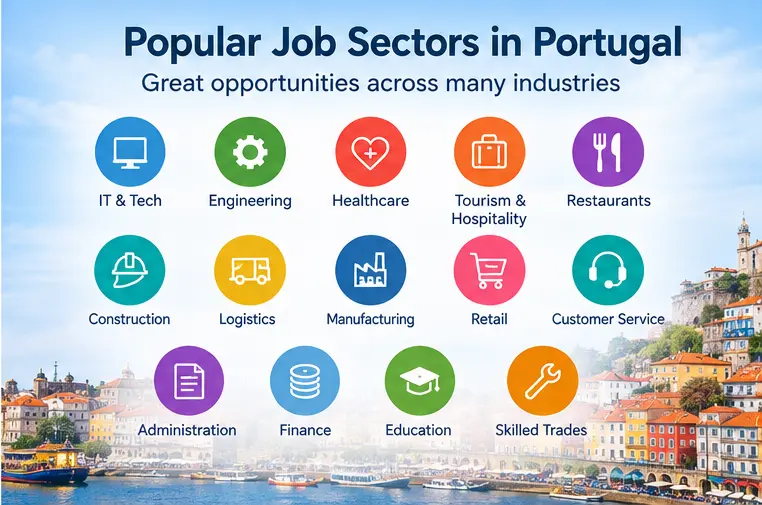
- Information technology
- Engineering
- Healthcare
- Tourism and hospitality
- Restaurants
- Construction
- Warehousing and logistics
- Manufacturing
- Retail
- Customer service
- Administration
- Finance
- Education
- Skilled trades
That said, availability shifts constantly by location and timing — just because a category exists broadly doesn’t mean a specific role is currently open. Rather than searching generic job titles, it’s better to browse actual live openings — for instance, roles like the live-in family helper position in Cascais, which show up under care and domestic work rather than a generic “jobs” search.
Do you need to learn Portuguese?
It depends on the role and the employer. Some international companies and roles operate entirely in English, while jobs involving regular contact with Portuguese-speaking clients, patients, or coworkers will usually require Portuguese.
Always check the language requirements listed on the actual job posting before applying.
If your Portuguese is limited, narrow your search using terms like:
- English-speaking jobs
- English required
- Portuguese not required
- International company
- Multilingual positions
Even if it’s not strictly required for the job, learning some Portuguese will make everyday life and workplace communication a lot easier — our content moderator role in Porto is one example of a position built around language skills rather than Portuguese fluency.
What qualifications do you need?
This depends entirely on the role. For regulated professions, you may need to have your qualifications formally recognized by the relevant national authority — this matters especially for jobs requiring licensing or professional registration.
Before applying, check:
- Whether the role is regulated
- Whether your qualification is recognized in Portugal (it isn’t automatic)
- Whether professional registration is required
- Whether additional exams or documentation are needed
- Whether Portuguese language proficiency is required for the role
A qualification earned elsewhere doesn’t automatically entitle you to practice a regulated profession in Portugal — it’s worth confirming this early rather than after you’ve applied.
Preparing your CV
Your CV should be clean, easy to scan, and clearly show what you bring to the table. Include:
- Name and contact details
- Professional profile/summary
- Employment history
- Education
- Relevant qualifications
- Skills
- Languages
- Professional certifications
- Notable achievements
Keep the information accurate and easy to skim. If you’re applying from abroad, clearly state whether you’re already in the country or already hold work authorization — this saves employers from having to guess. Our step-by-step application guide covers how to tailor a CV alongside the rest of the process.
What to check before accepting a job offer
Don’t judge an offer on salary alone. Before saying yes, review:
| Area | What to check |
|---|---|
| Employer | Company name and verifiable contact details |
| City | Exact work location |
| Contract | Employment type and duration |
| Payment terms | Gross vs. net salary; payment schedule and method |
| Start of work | Schedule and expected hours |
| Duties | Actual day-to-day responsibilities |
| Benefits | Only what’s explicitly stated |
| Accommodation | Whether it’s included |
| Transport | Whether you’ll need to commute |
| Work authorization | Confirmed legal status to work |
| Probation | Any applicable probation period |
| Notice conditions | Terms for resignation or termination |
Official Portuguese government guidance notes that once an employment relationship is established, terms like salary are formally set out by the employer — so read your contract carefully before signing.
Working in Portugal as a non-EU citizen
Immigration requirements deserve extra attention if you’re applying from outside the EU. Portugal offers several routes depending on the type of work — for example, residence visas for dependent (salaried) employment, and temporary-stay visas for short-term subordinate or independent professional activity. The right path depends entirely on your individual situation.
Some applicants may also go through Portugal’s job-seeker visa route. Current guidance from AIMA covers the residence authorization process for those who arrive on a job-seeker visa and later secure employment.
Immigration rules can and do change, so always confirm the latest requirements directly with the relevant Portuguese authority before making travel or employment decisions. Our visa guide category is a solid starting point, but AIMA should always be your final word.
Can you work in Portugal without a work visa?
It depends on your nationality and immigration status. EU/EEA/Swiss citizens follow a different set of rules than non-EU nationals.
A short-term Schengen visa should not be treated as a work visa — it’s capped at a maximum of 90 days and isn’t designed for regular employment. Separate visa categories exist specifically for professional activity.
If you’re unsure of your status, check directly with the Portuguese consulate or immigration authority before starting any work.
What does the Portuguese job market look like right now?
Don’t rely on outdated articles — always check current official statistics, since conditions shift over time. As of the provisional estimate from Portugal’s National Statistics Institute, unemployment stood at 5.7% in July 2026.
That figure reflects the overall labor market and doesn’t necessarily represent conditions in any specific occupation or region. Job availability depends on:
- Industry
- Occupation
- Region
- Qualifications
- Experience
- Language ability
- Employer demand
A sample application process
- Find the right jobs — target roles that genuinely match your experience and abilities.
- Check eligibility — don’t apply if you don’t meet the listed requirements.
- Tailor your CV — customize it for each job rather than sending the same version everywhere.
- Write a relevant application message — briefly explain how your background fits the role.
- Apply through official channels — use the employer’s own application system where available.
- Prepare for the interview — research the employer and reread the job’s actual duties.
- Review before accepting — check the contract, salary, location, working conditions, and work authorization before saying yes.
For a deeper breakdown of each step, visit our full application walkthrough.
How to spot fake job offers
International job seekers are often targeted by scams that look convincing at first glance. Watch for:
- Requests for upfront recruitment fees
- Pressure to transfer money before you’ve received a proper contract
- Requests for sensitive personal information that isn’t actually needed
- No verifiable information about the employer
- Vague or shifting job responsibilities
- Salary promises that seem too good to be true
- Urgency around travel arrangements
- Communication only through unofficial channels or personal accounts
Always verify the employer independently before wiring any money or sharing personal details. A legitimate offer should give you clear answers about who the employer is, what the job actually involves, where you’ll work, and what’s being offered.
A checklist for beginners
Before you start applying, get these ready:
- An updated CV
- Copies of your relevant qualifications
- Proof of professional qualification levels, where relevant
- References, if requested
- Application materials in Portuguese, if available
- A clear understanding of your work authorization status
- A list of target occupations
- A list of target locations
- Research on potential employers
- Interview preparation
- A plan to review any contract carefully before signing
If you’re a non-EU applicant, add your immigration and visa documentation to this list as well.
Frequently Asked Questions
Can foreigners work in Portugal? Yes, but requirements vary depending on your country of origin and immigration status. See our guide to finding a job in Portugal for more detail.
Do I need to speak Portuguese to find a job in Portugal? Not always — it depends on the employer and role. Some international positions operate in English, while others require Portuguese. See our Italian-speaking content moderator listing in Porto as an example of a language-based role.
Where can I search for jobs in Portugal? The IEFP employment portal, EURES, company career pages, and established job platforms are all good starting points. Official Portuguese guidance specifically recommends IEFP for job seekers.
Do regulated professions require formal recognition of qualifications? Often, yes. Portugal’s government notes that regulated professions may require recognition of your professional qualification by the relevant national authority.
Can I work in Portugal on a tourist or short-term visa? No — a short-stay Schengen visa isn’t a work visa. Separate visa categories exist for professional activity; see our visa guide category.
Should I review a job contract before accepting an offer? Yes, always. Check salary, working hours, responsibilities, contract length, location, and every other detail before committing.
Conclusion
There’s no single path to working in Portugal — it depends on your career goals, experience, nationality, language skills, and where you want to settle.
For beginners, the fundamentals matter most: find the right occupation, research trustworthy sources, put together a clear CV, verify employer details, understand the working conditions, and confirm your right to work before you commit to anything.
For immigration questions, always check current information from official sources like gov.pt and AIMA — not outdated articles or social media posts. And if you’re just getting started, explore the full Jobqora guide library, including our complete walkthrough on how to apply for jobs in Portugal.
2 thoughts on “Working in Portugal: A Beginner’s Guide”